

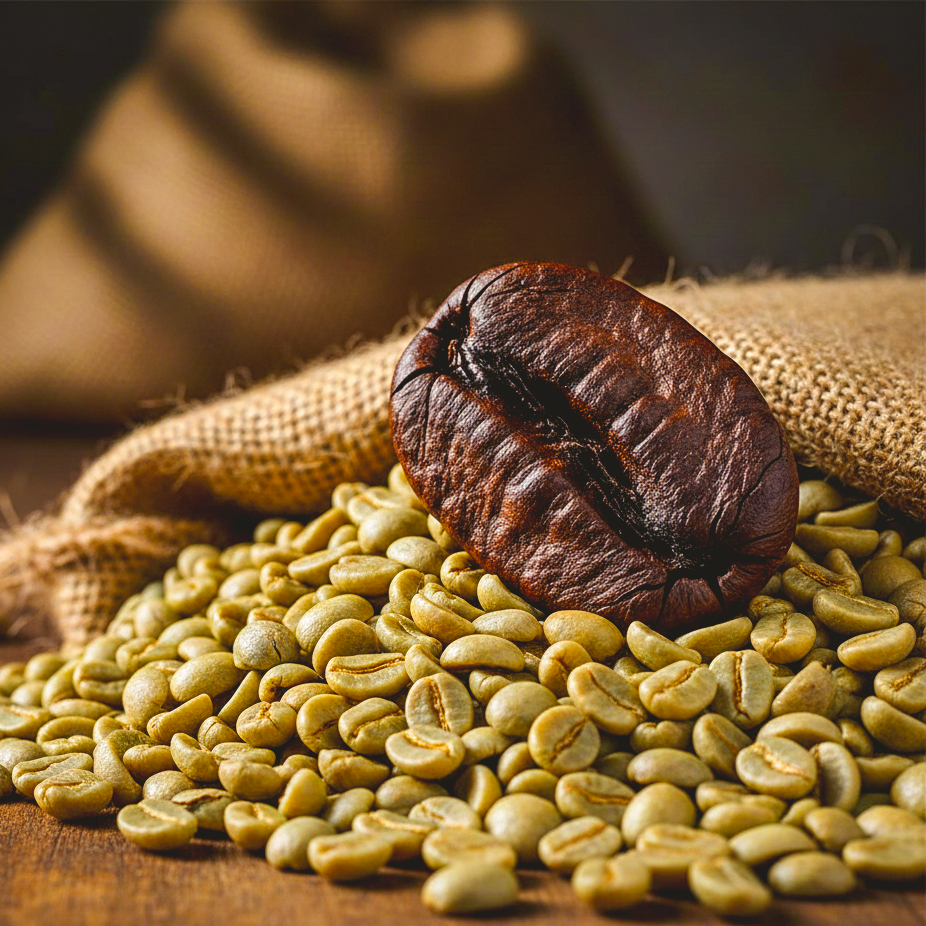
A Coffee Bean Looks Simple. But Inside? It’s a World of Flavour.
That little brown coffee bean you hold in your hand may look ordinary—but inside it lives hundreds of natural compounds working together to create the flavours you taste every day: chocolatey, nutty, fruity, floral, smooth, bold, or bright.
At Vidi’s Coffee, we believe understanding coffee makes drinking it even more joyful. So let’s explore what’s really inside a coffee bean—in a way that’s fun, simple, and scientifically accurate.
Coffee Is a Seed 🌱
A coffee bean is actually the seed of a fruit called a coffee cherry. Inside this seed are stored nutrients meant to help a plant grow—but when we roast coffee, heat transforms these nutrients into flavour and aroma.
Think of roasting as unlocking the bean’s hidden personality.
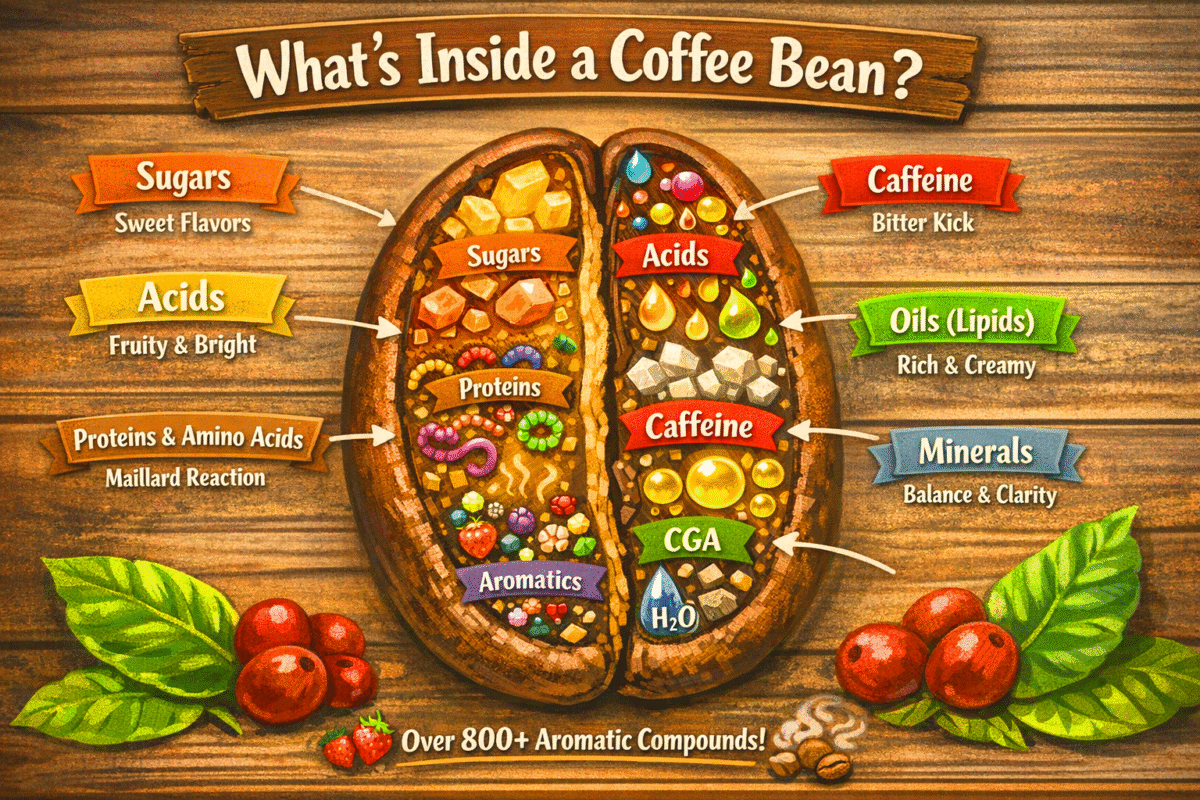
The Key Compounds Inside a Coffee Bean
Caffeine – The Gentle Wake-Up Call
Caffeine is one of coffee’s most famous compounds. It is naturally bitter, acts as a stimulant, and protects the coffee plant from insects.
Important truth: Dark roast coffee does not have more caffeine. Most bitterness in dark coffee comes from roasted compounds—not caffeine itself.
Chlorogenic Acids – Structure & Strength
Chlorogenic acids (CGAs) are naturally present in green coffee. They contribute bitterness and astringency, break down during roasting into flavour-active compounds, and are higher in Robusta than Arabica. Balanced well, they give coffee strength. Overdone, they taste harsh.
Natural Sugars – Sweetness Without Sugar
Coffee beans contain natural sugars, mainly sucrose. During roasting, sugars caramelise and react with amino acids to create flavours like caramel, cocoa, nuts, and toast. This is why high-quality coffee can taste sweet—even with no sugar added.
Lipids (Coffee Oils) – Body & Mouthfeel
Lipids add creaminess and body, carry aroma compounds, and enhance richness, especially in espresso. Arabica beans naturally contain more lipids, which is why they often feel smoother and fuller.
Aroma Compounds – Why Coffee Smells So Good
Coffee contains over 800 aroma compounds—more than wine. These compounds create floral notes, fruity hints, and nutty, spicy, chocolatey aromas. That first smell when you brew coffee is chemistry coming alive.
Why Different Coffees Taste Different
Every coffee tastes unique because of variety, processing method, roast profile, and brewing style. The bean already holds the flavour potential—roasting and brewing decide which flavours shine.
Coffee Is Like a Rainbow 🌈
Coffee isn’t one flavour. It’s sweetness, bitterness, brightness, aroma, and texture—blended into a single sip.
The Vidi’s Coffee Thought ☕
When you understand what’s inside a coffee bean, you don’t just drink coffee—you experience it. Every cup becomes a story of science, craft, and care.
Frequently Asked Questions (FAQs):
Frequently Asked Questions (FAQs)
Q: What is inside a coffee bean?
A: A coffee bean contains natural compounds such as caffeine, sugars, acids, lipids (oils), proteins, minerals, and over 800 aroma compounds. These compounds are responsible for coffee’s flavour, aroma, body, and bitterness.
Q: Why does coffee taste bitter?
A: Coffee tastes bitter mainly due to caffeine and chlorogenic acids. Excessive bitterness often comes from over-roasting or over-extraction rather than caffeine alone.
Q: Does dark roast coffee have more caffeine?
A: No. Dark roast coffee does not contain more caffeine. Light roasts often retain slightly more caffeine, even though dark roasts taste stronger.
Q: Does dark roast coffee have more caffeine?
A: No. Dark roast coffee does not contain more caffeine. In fact, light roasts often retain slightly more caffeine. Dark roast tastes stronger because of roasted flavour compounds.
Q: What gives coffee its aroma?
A: Coffee aroma comes from more than 800 volatile aroma compounds formed during roasting. These compounds create fruity, floral, nutty, spicy, and chocolate-like smells.
Q: Why does coffee taste sweet without sugar?
A: Coffee contains natural sugars like sucrose. During roasting, these sugars caramelise and create sweet flavour notes such as caramel, honey, and chocolate.
Q: What makes coffee smooth and creamy?
A: Lipids (natural coffee oils) contribute to body and mouthfeel, making coffee feel smooth, rich, and creamy, especially in espresso-based drinks.
Q: Why do different coffees taste different?
A: Coffee flavour varies based on coffee variety, origin, processing method, roast level, and brewing technique. Each coffee bean has a unique chemical composition.